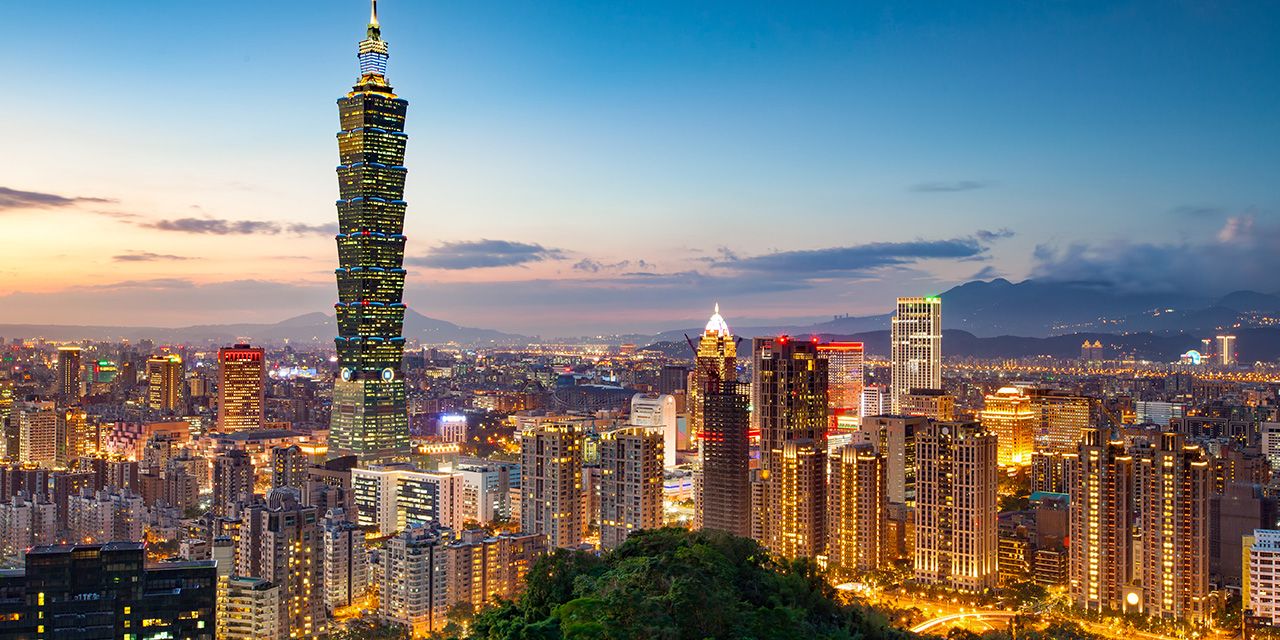
Like an annual rite of passage, leaders and followers of the world’s next revolution head to Taipei for COMPUTEX, a feverish veneration of the latest technology. Among the eager crowds and thousands of vendors, the expo has become a platform for Taiwanese startups to show the world what the future of smart manufacturing looks like.

COMPUTEX attracts tens of thousands of visitors each year.
As the world’s second-biggest ICT (information and communication technology) expo, COMPUTEX has often had to reinvent itself to move with the times. Hence the spawning of InnoVEX, an event which pairs venture capitalists with big ideas and ready-to-market products through a pitch competition, and SmarTex, a showcase for disruptive technologies such as the Internet of Things (IoT), artificial intelligence (AI) and robotics.
These technologies are ushering in the Fourth Industrial Revolution, presenting yet another radical change to the way we live and work. Taiwan is at the centre of this transformation, while COMPUTEX mirrors its development, progressing from manufacturing basic electronic products in the 1980s to becoming the global hub for intelligent solutions that it is today.
Asia’s Silicon Valley
As a veteran startup and R&D specialist, Edwin Liu has witnessed this progression first-hand. He is president of the quasi-governmental Industrial Technology Research Institute (ITRI), which has driven innovation and incubated some of Taiwan’s top tech companies for nearly five decades.
After the relatively tepid economic growth of recent years, Liu firmly believes Industry 4.0 is the key to a new “Taiwan Miracle”, referring to the rapid industrialisation and economic boom of the 1980s.
“I don’t think there is a choice. The manufacturing industry is a core component of our economy, so if we don’t do something we will suffer,” says Liu, describing how Taiwan has designated smart manufacturing as a cornerstone of its modern economy. Instead of quantity, Taiwan is looking at quality and intelligent products.
Instead of following trends, Liu believes Taiwan is ready to take the initiative: “We need to move from a reactive position into a proactive position, meaning we shouldn’t wait until we see a need.” In response, ITRI has developed a “2030 Technology Strategies and Roadmap”, which, Liu says, “changes the mindset to a top-down approach and assumes future scenarios for technology and market needs, meaning we do the research before the market actually needs it”.
For the technologies that reach commercialisation, the annual Taiwan Excellence Award celebrates and signifies the very best products made in Taiwan. Sometimes called the “Oscars of Taiwan” by industry insiders, the award exists to encourage the highest standards of quality and design among Taiwan-made products.
Recent award winners include cutting-edge IoT sensors, gateways, security devices and intelligent controllers — many of which can enable Industry 4.0.
All the elements are in place thanks to Taiwan’s fully developed IT ecosystem and talent pool. For example, Taiwan has a high density of major IT companies, such as iPhone manufacturer Foxconn Technology Group, which describes itself as a pioneer of the “advanced manufacturing and industrial internet ecosystem”.
Taiwan is home to the world's largest semiconductor foundry: Taiwan Semiconductor Manufacturing Company. In addition to three science-based industrial parks, it also cultivates a huge number of talented tech and engineering graduates through its centres of higher education.
“Taiwan is like a well-tended garden – ready to grow,” says Techman Robot COO Scott Huang. Based in Taoyuan, a half-hour drive from Taipei, Huang’s company has rapidly emerged since 2016 as the world’s second biggest maker of collaborative robots, aka “cobots”, which are designed to work closely with humans on a production line.
A spinoff company of Quanta Computer, the world’s biggest notebook computer manufacturer, Techman’s cobots are more humanlike than traditional robots. Cameras in their arms and integrated vision capabilities enable them to “see” what they’re doing and act accordingly, making them “very quick, nimble and smart”.
This allows them to complete a wide variety of complicated tasks such as assembling smartphones and motherboards, but also delicate tasks, such as preparing a cup of coffee or writing Chinese calligraphy.
They are also more flexible than traditional robots, meaning they can do one kind of job in the morning and another type of job in the afternoon, says Huang. “The most important thing about Industry 4.0 is flexibility,” he says. “There has to be feedback because we need the machine to learn so that it can customise a product quickly and easily. This is the future of consumerism.”
While Huang is keen to acknowledge that incentives such as the Taiwan Excellence Award and significant promotion at expos around the world have helped his company, he also emphasises the importance of public and private sector integration.
“Taiwan has a very strong ICT ecosystem – the supply chain is well connected and integrated,” he says. “You can get anywhere in two hours, meaning anything can be made quickly and well. You just need an idea. Taiwan has great potential to be Asia’s Silicon Valley.”
The Building Blocks of Industry 4.0
As well as the technology underpinning Industry 4.0, Taiwan also has the manufacturing industry to build it. One of the major players in this space is HIWIN, the second largest linear motion-control system maker in the world. Founded in 1989, its products range from, literally, the nuts and bolts of manufacturing lines to industrial and medical robots.
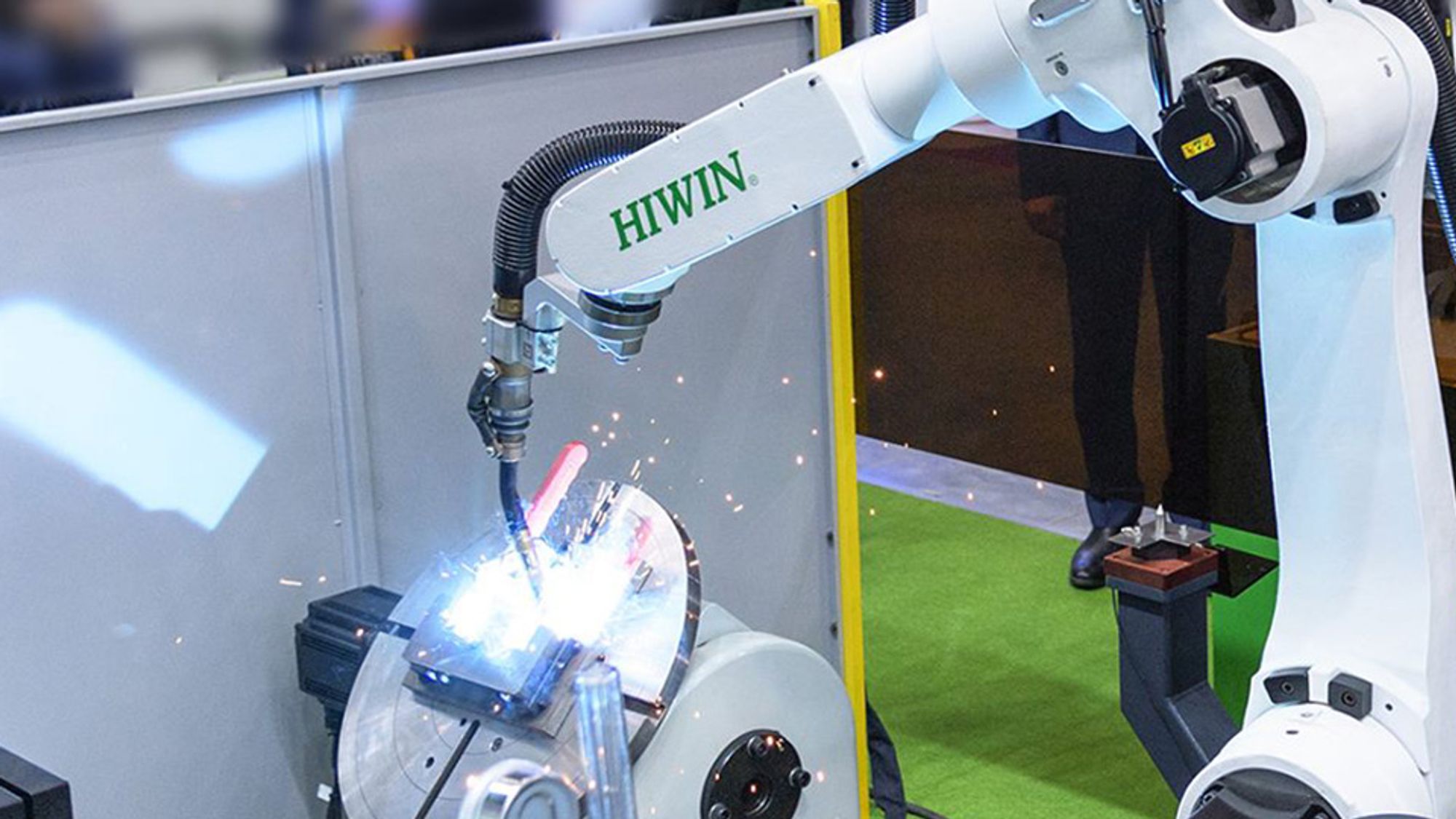
Image source: HIWIN Facebook page.
According to HIWIN chairman Eric Chuo, Taiwan has a complete supply chain of companies and products, and produces the building blocks for smart manufacturing – semiconductors. He adds that his company’s products are “key components for smart manufacturing”.
“Industry 4.0 is not just a slogan,” he says. Companies must upgrade to compete in a globalised world, whether this is from Industry 2.0, 2.5 or 3.0. “Every company must be realistic and do enough research and effort to eventually achieve Industry 4.0.”
This is also what ITRI’s Edwin Liu means by transforming Taiwan’s industries from labour-intensive to innovation-driven, and meeting two major challenges. “One is the technology challenge and the other is the cultural challenge: whether people are willing to change,” he says.
This means sending out teams to reach out to traditional manufacturers and even developing a tool that can translate analogue data into digital data, so it can be uploaded to the cloud for analysis and optimisation. It also means promoting “smart living, quality health and sustainable environment” concepts to the public and acting on them. In this way it can positively influence the cultural mindset and prepare Taiwan for the future.
For companies anywhere in the world, if you want to get ahead, you have to think ahead and work together leveraging the latest technology, Liu says. “We even say we would like to transform to Industry 5.0. That’s the target.”