6 Minute English now comes with a video! It's the same programme that you know and love, but now you can see us!
_____________________________________________________________________________________________________
Download a free 6 Minute English worksheet and transcript!
Try our free interactive quiz!
______________________________________________________________________________________________________


Introduction
When was the last time you had a vaccination, and what was it for? Many of us get vaccinations when we are children or when we go travelling, but did you know that scientists have been developing vaccines that can be personalised to help your body keep itself clear of some specific cancer types? Georgie and Phil discuss this and teach you some new vocabulary.
This week's question
According to the World Health Organisation, what is the most common cancer worldwide?
a) lung cancer
b) skin cancer
c) stomach cancer
Listen to the programme to hear the answer.
Vocabulary
a long time coming
taking a long time to achieve
false dawn
situation where something appears to be improving, when actually it isn't
space
field of research
breakthrough
significant progress in something
prime (something)
get (something) ready
promise
positive potential

TRANSCRIPT
Note: This is not a word-for-word transcript.
Georgie
Hi Phil.
Phil
Hi Georgie.
Georgie
Phil, have you had many vaccines in your life? So, these are injections to protect you from diseases.
Phil
Oh, I've had loads. I had all the ones you have when you’re a child, but I've also had some for travelling and working abroad so… yeah, I've had lots.
Georgie
OK. Well, many of us will have had vaccines to stop us getting common diseases such as flu or Covid 19, but could injections help us fight more complicated diseases too? In this episode of 6 Minute English, we'll be looking at some new research that has scientists very excited, and we'll be asking the question, 'Could vaccines cure cancer?'

Georgie
OK. Let's start with a quiz question, Phil. There are lots of different types of cancer affecting many parts of the body, but according to the World Health Organisation, what is the most common cancer worldwide? Is it:
a) lung cancer,
b) skin cancer, or
c) stomach cancer?
Phil
Well, I don't know. I'm going to guess b) skin cancer.
Georgie
Well, we'll find out the answer at the end of the programme.
Phil
Right. Now, this idea of a vaccine that could cure cancer sounds really interesting. Could you tell us a bit more about it, Georgie?
Georgie
Well, scientists have been trying to develop a cancer vaccine for quite a long time. If you think about many existing cancer treatments, such as radiotherapy and chemotherapy, these have quite a few side effects. But the idea is that a cancer vaccine would help the body's natural immune system help fight the disease, which could have fewer side effects and also be more effective. Scientists are particularly hopeful about a new vaccine developed to treat skin cancer. BBC Radio 4 programme Inside Science has been hearing about the latest research. Cancer cell biologist Anne Willis spoke to presenter Tom Whipple.
Tom Whipple
I guess this moment has been quite a long time coming, hasn't it? There's been some false dawns in cancer vaccines.
Anne Willis
I mean, there's been a lot of work in this space, and it's all been very encouraging, particularly in the animal models, but getting this to translate into humans can be a much harder, longer process, so it's very exciting that there's this breakthrough – apparent breakthrough – that's come through today.
Phil
Tom says that the development of the cancer vaccine has been a long time coming, and this means that it's taken a lot of time to achieve.
Georgie
Yes. Tom also says there have been some false dawns, an expression meaning that something looks like it's improving when it's actually not.
Phil
Anne says there's been a lot of work in this space. Space here means field of research – so, in this context, research into cancer vaccines.
Georgie
Scientists think they might have made a breakthrough. That means they've made significant progress.
Phil
And Georgie, these vaccines that we're talking about, they aren't quite like the ones that we're all familiar with, are they? This isn't a vaccine to prevent you from getting skin cancer, is it?
Georgie
No. The vaccine being tested is used to treat people after they've had a tumour removed. It's used to target any cancer cells that have been spread around the body, to stop the cancer from coming back, and the vaccine is made specially for each patient by looking at the cancerous cells in the tumour that's been removed. Anne Willis explained more to BBC Radio 4's Inside Science.
Anne Willis
So, cancer cells are very different from normal cells. They contain lots of mutations. So, you sequence the DNA of the cancer cell to work out how it's different from a normal cell. And then, particularly for the bits of the cancer that's different on the surface of the cell, you take those bits of DNA and then you put them into the RNA vaccine, and then they'll make these bits of proteins that get recognised by the immune system. So, it's a way of priming the immune system to the cancer.
Phil
Anne is saying that the scientists work out what in the cancer cells is different and put these bits into the vaccine.
Georgie
Right. The vaccine then becomes a way of priming the immune system to cancer. If you prime something, you get it ready. The vaccine basically helps the immune system get better at recognising and fighting cancer cells in the body.
Phil
Now, that sounds like some really clever science here. Could it make a big difference, Georgie?
Georgie
Well, more trials are needed, but scientists are hopeful. Here's Anne Willis again talking to Tom Whipple, presenter of Inside Science.
Tom Whipple
Are you excited?
Anne Willis
Oh, I mean, very! I'm just, you know… anything that will improve lives of cancer patients is always wonderful. And actually, seeing that this extraordinary technology is, sort of, starting to reach its promise – this is very exciting for everybody.
Phil
So, Anne is excited. She says that after a long time working on this technology, it's starting to reach its promise. And promise here means positive potential.
Georgie
OK. Phil, I think it's time I revealed the answer to my question. I asked you, "What is the most common form of cancer worldwide?" You said skin cancer, but the answer is actually lung cancer. In 2024, there were an estimated 2.4 million cases worldwide, according to the World Health Organisation.
Phil
OK. Let's recap the vocabulary we learned in this programme, starting with the expression a long time coming, which means something has taken a long time to achieve.
Georgie
A false dawn is when something appears to be improving, when it actually isn't.
Phil
Space can mean field of research.
Georgie
A breakthrough refers to making significant progress with something.
Phil
If you prime something, you get it ready.
Georgie
And promise can mean positive potential.
Phil
Once again, our six minutes are up. Test what you've learned with the worksheet on our website. And that's bbclearningenglish.com.
Georgie
Thanks for joining us and goodbye.
Phil
Bye.

What do you think of the new version of 6 Minute English? Email us at learningenglish@bbc.co.uk.
Next
Find an A-Z list of our programmes.
Find more programmes for your level here.
Practise your reading skills with The Reading Room.
ሐድሽ ፓድካስትታት ተመልከት 6 Minute English

Could vaccines cure cancer?
Episode 261105 / 05 Nov 2026
Can we train our own immune system to fight certain types of cancer?

Is aircon the answer to a heating world?
Episode 261029 / 29 Oct 2026
Do you have air conditioning in your house?

What should you eat for a better night’s sleep?
Episode 261022 / 22 Oct 2026
How much sleep do you get each night?


Can apps teach you a language?
Episode 260910 / 10 Sep 2026
What's better for learning languages – an app or a class?

Climate change and extreme weather
Episode 260903 / 03 Sep 2026
Every year we see damage, death and destruction caused by hurricanes, cyclones and typhoons - tropical storms. Is climate change making this impact worse?


Sharing the road with driverless cars
Episode 260820 / 20 Aug 2026
Would you trust a robot to drive you around a city?

Who does the housework?
Episode 260813 / 13 Aug 2026
When you were growing up, did your mum or dad do more household chores?
How do climate scientists make predictions?
Episode 260806 / 06 Aug 2026
What is the difference between a prediction and a projection?
The Enhanced Games
Episode 260730 / 30 Jul 2026
Would you watch a sport if you knew the athletes had taken drugs?

What's in a footballer's brain?
Episode 260716 / 09 Jul 2026
How do footballers cope with high-pressure scenarios like penalties and corners?



Stress-free family meals
Episode 260625 / 25 Jun 2026
What foods did you dislike when you were growing up?

Limiting screen time for children
Episode 260618 / 18 Jun 2026
Children are spending too much time with electronic devices.

How advertisers make us spend money
Episode 260611 / 11 Jun 2026
When was the last time you bought something you didn't need?




How reading shapes your brain
Episode 260514 / 14 May 2026
Can learning to read alter the way your brain works?
Searching for life on another planet
Episode 260507 / 07 May 2026
Does life on another planet exist?
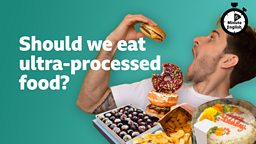
Should we eat ultra-processed food?
Episode 260430 / 30 Apr 2026
Ultra-processed food can be tasty, but what is it doing to our health?



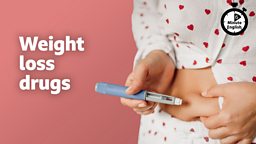
Weight loss drugs
Episode 260326 / 26 Mar 2026
How do weight loss drugs like Ozempic and Mounjaro help people lose weight?
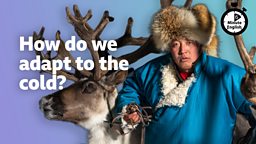
How do we adapt to the cold?
Episode 260319 / 19 Mar 2026
Would you prefer to be too hot or too cold?

Should we pay more for chocolate?
Episode 260312 / 12 Mar 2026
Is chocolate becoming more expensive?
Why are some animals black and white?
Episode 260305 / 05 Mar 2026
The answer is not as black and white as you might think!




Why are billionaires building bunkers?
Episode 260129 / 29 Jan 2026
Is the end of the world closer than we thought?

Scared of speaking English?
Episode 260122 / 22 Jan 2026
Beth and Pippa talk about why we often find speaking a new language scary.

What English phrases really mean
Episode 260115 / 15 Jan 2026
Why don't British people say what they mean, or mean what they say?