Hospital urgent and emergency care downgraded by CQC

 PA Media
The urgent and emergency care provision at a Sussex hospital has been downgraded by the Care Quality Commission (CQC) following an inspection earlier this year.
Conquest Hospital in St Leonards has gone from good to requires improvement, while in a separate report, the provision at Eastbourne District General Hospital remained as requires improvement.
Amanda Williams, CQC deputy director of hospitals, secondary and specialist care in the South East, said inspectors found staff under significant pressure "struggling to provide safe and effective care".
East Sussex Healthcare NHS Trust, which runs both hospitals, said it accepted the findings and changes had been made since the inspections.
Chief executive Jayne Black said: "These inspections took place in January and February and we have made a number of changes since then."
She said these included "strengthening rapid assessment at the front door", increasing senior clinical oversight of patients, improving staffing and escalation arrangements, and changes to the day-to-day management of the departments.
"We are also continuing work to improve patient flow and reduce overcrowding and long waits," she added.
According to Williams, people were treated with "kindness and compassion" but both emergency departments "experienced significant overcrowding primarily driven by issues with flow" which she said leaders must address.
'Clear vision'
At Conquest Hospital, inspectors found that people did not always receive their regular medicines on time, with one person remaining in the department for nearly 24 hours without critical blood clot and blood pressure medications.
Staffing issues were also present, including a lack of 24-hour cardiology cover and paediatric nursing staff.
Leaders had failed to effectively tackle risks that had been on their risk register for more than five years, including poor sepsis management and overcrowding, inspectors found.
But leaders had created a supportive and caring team culture, and had a clear vision for urgent and emergency care.
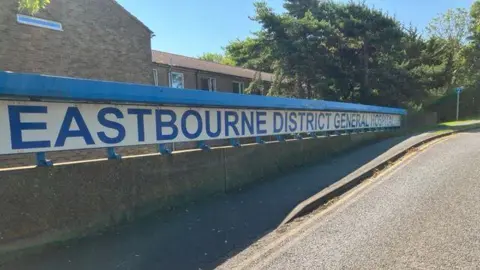 Mark Norman/BBC
At Eastbourne District General Hospital, inspectors found that people were not always being triaged effectively, and staff were not using triage scores to ensure people were seen in order of clinical priority.
Leaders had not addressed confusion regarding which children and young people could be safely assessed and treated there, and who should be directed the Conquest Hospital.
But the inspection found that handover times had been improved.
Between June 2024 and February 2025, 15-20% of people arriving by ambulance had to wait more than 30 minutes to be transferred. By September 2025, less than 10% waited that long.
Williams added: "We've told leaders where we expect to see rapid improvements and requested action plans for both services."
Black accepted there was "more to do" and said, "we are not complacent about that".
Follow BBC Sussex on Facebook, on X, and on Instagram and listen to BBC Radio Sussex on Sounds. Send your story ideas to southeasttoday@bbc.co.uk or WhatsApp us on 08081 002250.