No radical change after nationalisation, GWR says

 Press Association
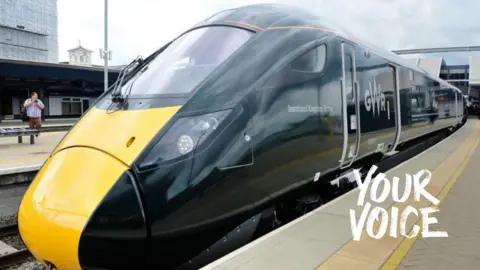
The boss of Great Western Railway (GWR) has said customers should not expect "radically different" change ahead of the company returning to public ownership next month.
From 13 December 2026, a new company called Greater Western Railway Limited will operate the services, replacing First Greater Western Limited, as part of the government's plan to nationalise all rail services in England by 2027.
Speaking on BBC Radio Gloucestershire's Your Voice segment, GWR managing director Mark Hopwood said staff had been working hard behind the scenes to ensure passengers do not notice too much change.
"Fundamentally, it's going to be the same staff on the same trains at the same stations," he said.
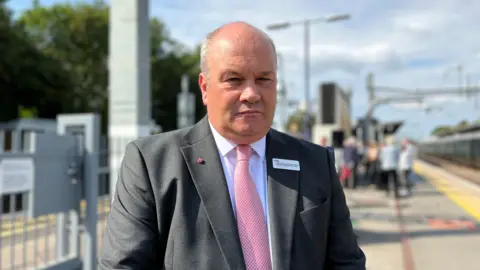
The GWR boss added: "I think people should be reassured that this isn't a change that's going to make everything radically different, but it will be a change that I think will put the right foundations in for us to build a better railway."
The Swindon-based operator, which is owned by FirstGroup, has run services and linked London to the south-west of England and Wales since 1996.
Several rail firms around the country are already publicly owned, including Great Anglia and South Western Railway.
Welsh services were nationalised in 2021 and Scotland took trains into public ownership the following year.
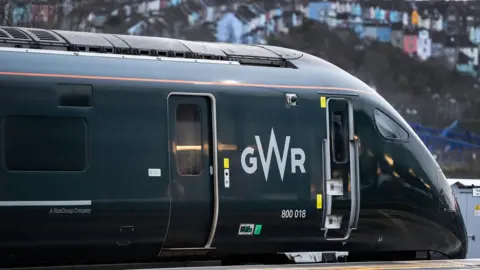
While there will be little immediate change to day-to-day services and timetables, Hopwood said they were working on future plans, including freeing up more carriages for services.
"We have got a plan to lengthen some trains, but we don't have enough rolling stock to lengthen everything," he explained.
"We are currently introducing some additional rolling stock in Devon and Cornwall and that is then releasing some trains to lengthen services in this part of the world.
"Perhaps not as many as everyone would like, but it is important that we take this step by step."
 Great Western Railway
Hopwood also addressed commuter concerns over cancellations and delays.
One passenger who works in Birmingham said he found commuting "frustrating" due to cancellations which often make him late for work.
"Since the last month it has been horrible," Adedoio said.
"I'll have to do an extra hour at work to cover up my hour that the train has been delayed."
Responding to concerns about a lack of drivers, Hopwood said the company has "more drivers than ever before".
However, he added: "We've got a lot more trains being cancelled than I would like.
"A lot of the issues that we've seen on my side of the business are more about rolling stock than drivers."
Hopwood said it had been a challenging summer due to the extreme weather and there were ongoing discussions about replacing some of the older trains in the future.
He said: "In the summer, the higher temperatures are an issue. And I think they're particularly an issue for our older diesel trains that were built in the 1980s, the early 1990s.
"They either don't have air conditioning or they have a very basic version. And they're the trains that I'm really keen to get replaced."
Hopwood said it was hoped nationalisation would help to bring in more funding.
"We haven't fully recovered from what happened during Covid because we've got more people working from home, we've got more people travelling off-peak, and while that's great for those people, it has reduced our revenue.
"So, the government is subsidising the railway quite a lot."
Follow BBC Gloucestershire on Facebook, X and Instagram. Send your story ideas to us on email or via WhatsApp on 0800 313 4630.