Hundreds of acres of farmland to become salt marsh

 WWT
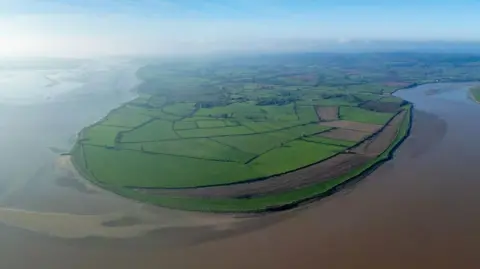
A planning application to turn hundreds of acres of farmland back into salt marsh has been submitted by a national charity.
About 365 acres (148 hectares) of low-lying land on the Awre peninsula, in the Forest of Dean in Gloucestershire, was bought by the Wildfowl and Wetlands Trust (WWT) in December 2024.
According to the trust, a salt marsh was "present on the site centuries ago" and it has now applied to the Forest of Dean District Council to breach the sea wall and allow salt water back onto the land.
The application, which also includes building a new flood defence, ponds and creeks and changing some public footpaths, is due to go out for consultation at the end of the month.
The WWT, which runs 10 wetland bird reserves across the UK, is calling for more than one million hectares of wetlands to be restored across the world.
Scientists calculate that 85% of the world's wetland habitats have been lost as marshes were drained for agriculture and swamps were cleared for construction as cities expanded.
In Gloucestershire, the charity said the farmland on the Awre peninsula had flooded in the past and was "at increasingly high risk of flooding".
It said by breaching the sea wall and allowing estuary water to cover the land, the area of salt marsh could be "significantly" increased.
 Wildfowl and Wetlands Trust (WWT)
Along with "moated islands" in the lagoon, ponds will also be created, away from footpaths, to allow birds to rest and feed undisturbed.
The trust said the nature reserve would not only be a "haven for wildlife" but would boost biodiversity, reduce flooding issues and help the environment.
Furthermore, the trust said, the development would have "no significant impact on the formation or strength" of the Severn Bore - which occurs when a large tidal surge pushes up the River Severn against a current, causing towering waves.
The WWT said its "early modelling" showed the wave would "pass the entrance to the breach before the site begins to fill with water" so the bore would still run as normal.
Lilly Dawson, senior project manager at WWT, said: "As well as delivering huge benefits to wildlife on the estuary, this project will allow farming to continue on the peninsula and provide a nature-rich haven for local people to enjoy.
"Salt marsh is a nationally rare habitat with huge value to a range of species and we're pleased to be playing our part in the recovery of nature in the Forest of Dean."
Work is due to begin on the site next year.
Follow BBC Gloucestershire on Facebook, X and Instagram. Send your story ideas to us on email or via WhatsApp on 0800 313 4630.