Severn Trent Water boss on bills, leaks and sewage
The chief executive of Severn Trent Water has defended the company's record on sewage pollution and rising water bills while admitting there is more work to do.
James Jesic was speaking on BBC Radio WM's Hot Seat, where he answered questions from listeners about river pollution, water supplies, burst pipes and the cost of their bills.
The chief executive, who took on the role in January after 23 years with the company, said Severn Trent was investing in improvements but acknowledged customers had reason to expect better.
Here are five key takeaways from the interview.


'There is more work to do' on river pollution
Angler Steve Pattingham raised concerns about the condition of rivers, including the River Severn, saying water quality had visibly deteriorated during his lifetime.
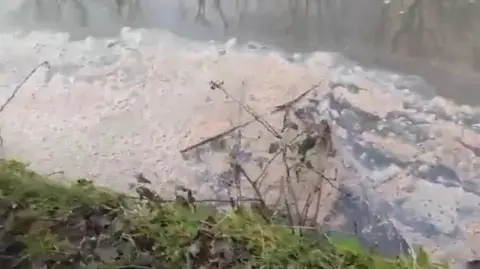
He described seeing foam on the water and sanitary products in rivers, expressing frustration about sewage discharges and their impact on the environment.
Jesic acknowledged there was more to do but pointed to reductions in phosphate and ammonia levels.
""The challenge that we're seeing at the moment is that river quality is not just a function of what's happening from a water company perspective.
"The way that everybody could really help us to help improve things further is to really think about their disposal of those sorts of products and not use the toilet as a magic bin where everything just disappears."
He also argued that agricultural runoff and industrial pollution were contributing to poor river conditions.
"Over the years, Severn Trent has invested genuinely billions of pounds in terms of improving final effluent from our wastewater treatment works but also in terms of reducing spill frequency."
The company was previously told by Ofwat that it had breached rules over its handling of wastewater and sewage. It avoided a financial penalty after committing £98m to improvements, with the regulator recognising its efforts to take accountability.

What is being done about sewage spills?
 Paul Cawthorne
The interview comes after Severn Trent was condemned in Parliament following a sewage spill which killed hundreds of fish in the Stourbridge canal.
Stourbridge MP Cat Eccles described the incident as unacceptable and called for the water industry to be brought back into public ownership.
Jesic apologised for the incident, explaining that a sewer pipe had burst and outlining the subsequent repair and clean-up work.
"What's incumbent on us now is to do a cleanup, which we've done, and then make sure that we fix that particular area and make sure it doesn't happen again."
He said the company had made around 3,000 interventions to reduce storm overflows across the Midlands and claimed spill frequency had fallen by about 30% last year.
"We are one of the best companies in the UK. We're actually better than much of Europe; all of our storm overflows are monitored.
"That's not necessarily the case elsewhere," he said.

Why are water bills going up?
 Getty Images
Severn Trent customers have faced an increase of around 10 per cent in their water bills from April, equivalent to an extra £52 a year.
Jesic defended the need for further investment, saying money comes from a combination of investors, borrowing and customer bills.
"Unfortunately, what we're seeing is climate change, we're seeing population growth, and in order to deliver against that, we have to keep investing, and therefore, we've had to put customer bills up to help fund part of that investment.
"With the investment and the borrowing that we do, that actually keeps bills lower than they should be."
Jesic has a theoretical maximum pay package of up to £4.8 million in a single year. His base salary is £775,000, but after the annual bonus, long-term incentive plan and benefits are counted, what he takes home annually could balloon.
"The likelihood of me ever getting that is extremely, extremely low.
"My pay is set; I don't decide my pay, the board decides my pay," he said.

Burst pipes and frustrating repair delays
 Getty Images
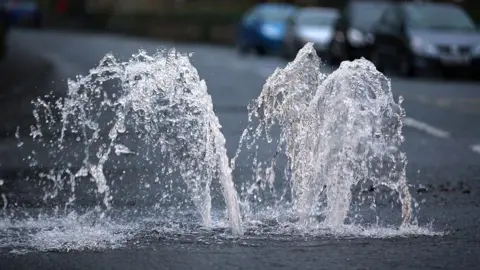
One listener told the programme it had taken three days for Severn Trent to repair a burst water main, raising concerns about the time taken to resolve problems.
Jesic admitted the experience was not good enough and said dry ground conditions could contribute to an increase in burst pipes.
He also explained that responsibility for leaks can depend on where they occur, with homeowners responsible for the supply pipe between the street and their property.
"It can be the case that at times it is a responsibility of the customer, the homeowner, to fix that particular pipe.
"We own the pipe in the street. The pipe from the street to your house is actually your responsibility."

New water supplies and opportunities for jobs
 Bloomberg via Getty Images
With demand for water increasing during hotter summers, Jesic outlined plans to improve the region's water infrastructure.
These include a proposed new treatment works capable of supplying 90 million litres of water a day, as well as exploring whether former quarries could be converted into reservoirs.
"We've got a 25-year plan that really thinks about where we need water resources, what additional water resources we need, and our investment profile absolutely matches that."
He also highlighted employment opportunities at Severn Trent, which employs around 11,000 people.
These include apprenticeships, graduate schemes and paid work experience. He said some apprenticeship routes had relaxed GCSE maths requirements to help more young people into employment.
"We're really focused on the young person employment issue that we're seeing across the Midlands. In Birmingham alone, there's 45,000 young people not in work.
"We know and recognise there's lots of talented individuals within that pool, and there's lots that we're doing at Severn Trent to really help people into that space."
