Lower rainfall means hosepipe ban to stay in place

 Getty Images
The Thames Water area saw just over a third of the rainfall between March and September recorded in the same period two years ago, the company has said.
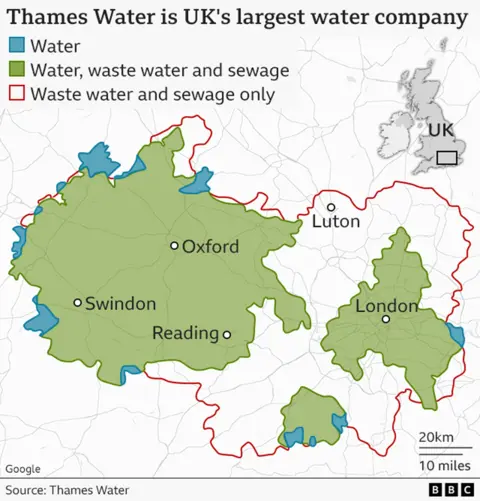
The Environment Agency declared a drought across London and the Thames Valley 100 days ago on 29 July.
Thames Water said while recent rain had "helped some rivers and reservoirs recover… months of sustained rainfall are needed to rebuild supplies" so a hosepipe ban would remain in place.
On Tuesday, Farmoor Reservoir near Oxford was at 76% capacity and reservoir storage across London stood at 56%.
Thames Water said between March and September, 194mm of rainfall was recorded, just under 50% of the long-term average (LTA).
Over the same time in 2024, 570mm was recorded, which was 145.6% of the LTA.
 Getty Images
Julie Morton, Thames Water's head of water resources, said: "It's 100 days since the Environment Agency declared drought and we have faced one of our most challenging summers in recent memory.
"Record-breaking dry weather and five heatwaves have put significant strain on water resources in our region.
"The recent rain has been welcome, however, recovery from a drought that developed over many months will take time, particularly when the ground is so dry.
"The forecast looks relatively dry for the first half of November, and we need sustained rainfall through the autumn and winter to replenish water resources ahead of next spring and summer."